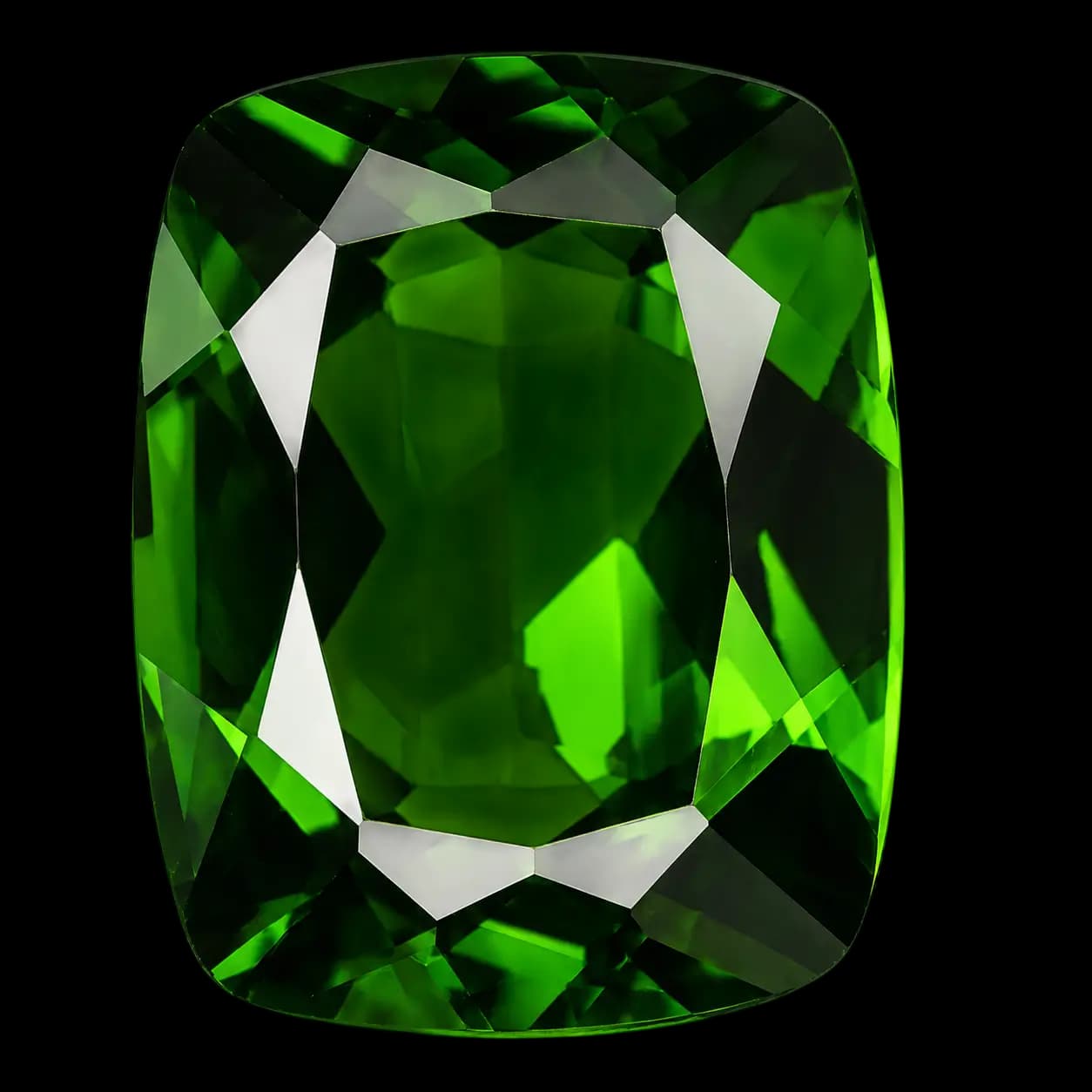
Diopside
Diopside is a vibrant gem admired for its rich green color, strong luster, and collector appeal. Its vivid tones and natural beauty make it a striking choice for jewelry.
Diopside is a calcium magnesium silicate mineral from the pyroxene family. It typically forms in metamorphic rocks, skarns, and other calcium- and magnesium-rich geological environments. The species is best known in gem form for its vivid green chrome-bearing material, but it can also appear in yellow, white, gray, black, blue, and violet varieties such as violane. Its chemical formula is CaMgSi2O6, and it crystallizes in the monoclinic system.
Natural diopside is valued for its bright vitreous luster, attractive color, and strong character in well-cut stones. Chromium can produce an intense forest-green tone, while manganese may contribute to violet to blue shades in rare material. Historic gem references and mineral collections have long featured diopside for its distinct color range and interesting crystal habits. Today, natural diopside gemstone is appreciated by buyers who want a beautiful, affordable alternative to some higher-priced colored gems, especially in jewelry designs where color richness matters.
Famous gemstone material includes chrome diopside from Siberia and other notable localities that produce clean, saturated green stones. Diopside jewelry is especially appealing in rings, pendants, and earrings, where its color can be showcased with elegant cuts. Buyers value it for its natural beauty, variety, and accessible price point compared with many other colored gemstones.
- Mineral Family
- Pyroxene
- Chemical Formula
- CaMgSi2O6
- Mohs Hardness
- 5 - 6
- Refractive Index
- 1.664 - 1.730
- Specific Gravity
- 3.22 - 3.40
- Cleavage
- Good
- Crystal System
- Monoclinic
- Luster
- Vitreous
- Color Range
- Green, Yellow, Gray, Black, White, Purple, Blue
When buying a Diopside gemstone, color is usually the first quality factor to examine. The most desirable stones show an even, lively green with strong saturation and a clean, attractive appearance. Chrome-bearing stones are especially prized for their rich color, while violet-blue violane is rarer and more unusual. Look for stones that appear bright in both daylight and indoor lighting.
Clarity is also important. Many diopside stones are included, so eye-clean stones are less common and typically command higher prices. In faceted stones, good transparency and minimal visible inclusions improve brilliance. The cut should be well proportioned to bring out color and reduce the visibility of inclusions. Because diopside has a moderate hardness, a sturdy, protective setting is recommended for rings worn regularly.
Carat weight affects price, but color and clarity usually matter more than size alone. Origin can influence desirability, especially for chrome diopside from well-known localities. Treatments should always be disclosed. Natural diopside is often sold untreated, but buyers should still ask whether any enhancement has been used. Certification from a respected gem lab is helpful for confirming identity, origin clues, and treatment status.
Always buy from a seller who can explain whether the stone is natural, lab-grown, or treated, and who can provide clear photos or videos. Authenticity depends on trustworthy documentation, transparent disclosure, and a realistic price. For Diopside jewelry, request matching stones for pairs or sets so the color stays consistent.
Clean Diopside gently with lukewarm water, mild soap, and a soft brush. Rinse well and dry with a soft cloth. Avoid ultrasonic cleaners and steam cleaning, especially for stones with visible inclusions or fractures.
Store diopside separately from harder gemstones to prevent scratches. A fabric-lined box or individual pouch is ideal. Because it has good cleavage and moderate hardness, it should be handled with care in everyday wear, especially in rings and bracelets.
Remove Diopside jewelry before sports, heavy lifting, gardening, or household cleaning. Keep it away from harsh chemicals, sudden temperature changes, and rough impact. With proper care, natural Diopside can remain beautiful for many years.
Diopside is a calcium magnesium silicate mineral from the pyroxene family. It typically forms in metamorphic rocks, skarns, and other calcium- and magnesium-rich geological environments. The species is best known in gem form for its vivid green chrome-bearing material, but it can also appear in yellow, white, gray, black, blue, and violet varieties such as violane. Its chemical formula is CaMgSi2O6, and it crystallizes in the monoclinic system.
Natural diopside is valued for its bright vitreous luster, attractive color, and strong character in well-cut stones. Chromium can produce an intense forest-green tone, while manganese may contribute to violet to blue shades in rare material. Historic gem references and mineral collections have long featured diopside for its distinct color range and interesting crystal habits. Today, natural diopside gemstone is appreciated by buyers who want a beautiful, affordable alternative to some higher-priced colored gems, especially in jewelry designs where color richness matters.
Famous gemstone material includes chrome diopside from Siberia and other notable localities that produce clean, saturated green stones. Diopside jewelry is especially appealing in rings, pendants, and earrings, where its color can be showcased with elegant cuts. Buyers value it for its natural beauty, variety, and accessible price point compared with many other colored gemstones.
- Mineral Family
- Pyroxene
- Chemical Formula
- CaMgSi2O6
- Mohs Hardness
- 5 - 6
- Refractive Index
- 1.664 - 1.730
- Specific Gravity
- 3.22 - 3.40
- Cleavage
- Good
- Crystal System
- Monoclinic
- Luster
- Vitreous
- Color Range
- Green, Yellow, Gray, Black, White, Purple, Blue
When buying a Diopside gemstone, color is usually the first quality factor to examine. The most desirable stones show an even, lively green with strong saturation and a clean, attractive appearance. Chrome-bearing stones are especially prized for their rich color, while violet-blue violane is rarer and more unusual. Look for stones that appear bright in both daylight and indoor lighting.
Clarity is also important. Many diopside stones are included, so eye-clean stones are less common and typically command higher prices. In faceted stones, good transparency and minimal visible inclusions improve brilliance. The cut should be well proportioned to bring out color and reduce the visibility of inclusions. Because diopside has a moderate hardness, a sturdy, protective setting is recommended for rings worn regularly.
Carat weight affects price, but color and clarity usually matter more than size alone. Origin can influence desirability, especially for chrome diopside from well-known localities. Treatments should always be disclosed. Natural diopside is often sold untreated, but buyers should still ask whether any enhancement has been used. Certification from a respected gem lab is helpful for confirming identity, origin clues, and treatment status.
Always buy from a seller who can explain whether the stone is natural, lab-grown, or treated, and who can provide clear photos or videos. Authenticity depends on trustworthy documentation, transparent disclosure, and a realistic price. For Diopside jewelry, request matching stones for pairs or sets so the color stays consistent.
Clean Diopside gently with lukewarm water, mild soap, and a soft brush. Rinse well and dry with a soft cloth. Avoid ultrasonic cleaners and steam cleaning, especially for stones with visible inclusions or fractures.
Store diopside separately from harder gemstones to prevent scratches. A fabric-lined box or individual pouch is ideal. Because it has good cleavage and moderate hardness, it should be handled with care in everyday wear, especially in rings and bracelets.
Remove Diopside jewelry before sports, heavy lifting, gardening, or household cleaning. Keep it away from harsh chemicals, sudden temperature changes, and rough impact. With proper care, natural Diopside can remain beautiful for many years.
Diopside for Sale
No gems found
Try broadening your search or adjusting your filters.
Have a gem of your own? List it free - no fees