Andalusite
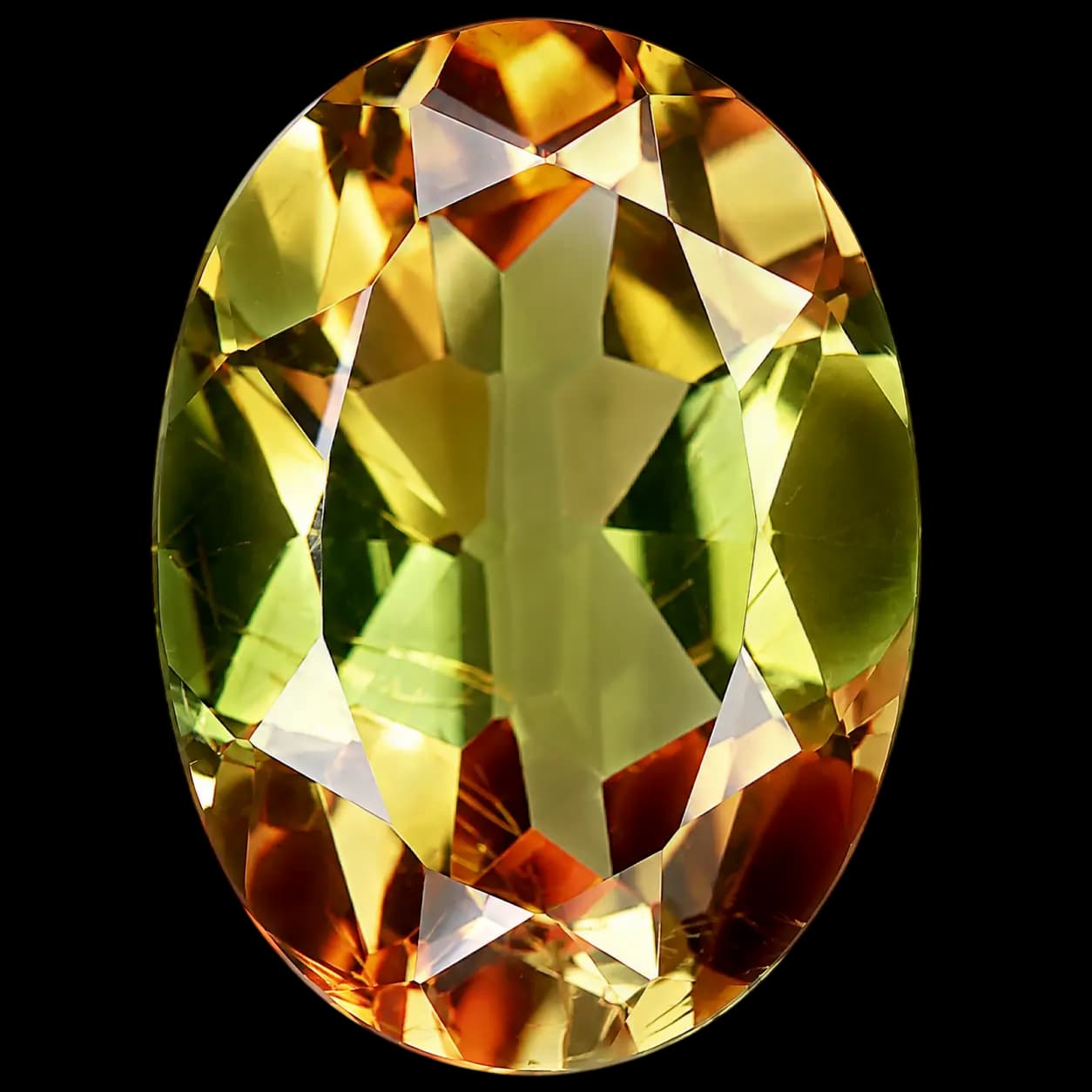
Natural Andalusite is a rare gemstone admired for its remarkable pleochroism, displaying green, golden, orange, and reddish-brown tones from different viewing angles. Its unique color play and durability make it a distinctive choice for fine jewelry and gemstone collections.
Andalusite is a naturally occurring aluminum silicate mineral prized for its exceptional pleochroism, an optical phenomenon that allows the gemstone to display multiple colors depending on the viewing angle. A single stone may reveal shades of olive green, golden yellow, orange, reddish-brown, and even subtle brown simultaneously, making every Andalusite gemstone visually unique.
The mineral belongs to the Al2SiO5 polymorph group alongside kyanite and sillimanite, although each has a different crystal structure. Andalusite forms under moderate temperatures and pressures during the metamorphism of aluminum-rich rocks such as schists and gneisses. Transparent crystals suitable for faceting are relatively uncommon despite the mineral itself being widespread.
With a Mohs hardness of 6.5 to 7.5, Andalusite offers good durability for jewelry when worn with reasonable care. It has a vitreous luster, orthorhombic crystal system, refractive index of approximately 1.629 to 1.650, and specific gravity between 3.13 and 3.17.
The finest gem-quality Andalusite is sourced primarily from Brazil, which produces large, clean crystals with vivid pleochroism. Other important sources include Sri Lanka, Spain, Australia, Madagascar, Namibia, Russia, South Africa, and the United States.
Collectors also appreciate notable varieties such as Chiastolite, recognized for its natural cross-shaped inclusions, and the rare cat's-eye Andalusite displaying chatoyancy. While these are prized by collectors, transparent faceted Andalusite remains the preferred choice for jewelry.
Today, natural Andalusite is used in rings, pendants, earrings, bracelets, and custom designer jewelry. Buyers value the gemstone for its rarity, unusual optical character, natural earthy elegance, and the fact that every stone presents a different combination of colors.
- Mineral Family
- Andalusite
- Chemical Formula
- Al2SiO5
- Mohs Hardness
- 6.5 - 7.5
- Refractive Index
- 1.629 - 1.650
- Specific Gravity
- 3.13 - 3.17
- Cleavage
- Good to perfect
- Crystal System
- Orthorhombic
- Luster
- Vitreous
- Color Range
- Green, Yellow, Red, Orange
When buying an Andalusite gemstone, color and pleochroism are the most valuable characteristics. Premium stones display strong, attractive transitions between olive green, golden yellow, orange, and reddish-brown without appearing overly dark.
Clarity is another important consideration. Eye-clean gemstones with minimal visible inclusions are uncommon and generally command higher prices. Small inclusions are acceptable if they do not reduce transparency or diminish the gemstone's optical effects.
Cut plays a critical role because it determines how effectively the pleochroism is displayed. Skilled cutters carefully orient the crystal to maximize visible color changes. Oval, emerald, cushion, and marquise cuts often highlight the directional color shifts particularly well.
Carat weight significantly influences value because clean crystals above five carats become increasingly rare. Larger gemstones with excellent color and clarity are especially sought after by collectors.
Brazil remains the most recognized source of fine gem-quality Andalusite, although beautiful stones are also available from Sri Lanka, Madagascar, Australia, Namibia, and other localities.
Most gem-quality Andalusite on the market is untreated, which is a major advantage for buyers seeking natural gemstones. Synthetic Andalusite exists for industrial purposes but is rarely encountered in the jewelry trade. Always purchase from reputable sellers who clearly disclose treatments and provide independent laboratory certification from respected gemological laboratories.
Price depends on the intensity of pleochroism, color balance, clarity, cut quality, carat weight, origin, and overall rarity.
Andalusite is suitable for regular jewelry wear but should be protected from hard impacts because of its good to perfect cleavage.
Clean the gemstone using lukewarm water, mild soap, and a soft brush or lint-free cloth. Rinse thoroughly and dry carefully after cleaning.
Avoid ultrasonic cleaners and steam cleaning, especially for stones containing inclusions or mounted in delicate jewelry.
Store Andalusite separately from harder gemstones such as diamond, sapphire, and ruby to prevent scratching. Remove jewelry before heavy physical activities, household cleaning, or exposure to harsh chemicals. With proper care, natural Andalusite jewelry will retain its brilliance and distinctive color play for many years.
Andalusite is a naturally occurring aluminum silicate mineral prized for its exceptional pleochroism, an optical phenomenon that allows the gemstone to display multiple colors depending on the viewing angle. A single stone may reveal shades of olive green, golden yellow, orange, reddish-brown, and even subtle brown simultaneously, making every Andalusite gemstone visually unique.
The mineral belongs to the Al2SiO5 polymorph group alongside kyanite and sillimanite, although each has a different crystal structure. Andalusite forms under moderate temperatures and pressures during the metamorphism of aluminum-rich rocks such as schists and gneisses. Transparent crystals suitable for faceting are relatively uncommon despite the mineral itself being widespread.
With a Mohs hardness of 6.5 to 7.5, Andalusite offers good durability for jewelry when worn with reasonable care. It has a vitreous luster, orthorhombic crystal system, refractive index of approximately 1.629 to 1.650, and specific gravity between 3.13 and 3.17.
The finest gem-quality Andalusite is sourced primarily from Brazil, which produces large, clean crystals with vivid pleochroism. Other important sources include Sri Lanka, Spain, Australia, Madagascar, Namibia, Russia, South Africa, and the United States.
Collectors also appreciate notable varieties such as Chiastolite, recognized for its natural cross-shaped inclusions, and the rare cat's-eye Andalusite displaying chatoyancy. While these are prized by collectors, transparent faceted Andalusite remains the preferred choice for jewelry.
Today, natural Andalusite is used in rings, pendants, earrings, bracelets, and custom designer jewelry. Buyers value the gemstone for its rarity, unusual optical character, natural earthy elegance, and the fact that every stone presents a different combination of colors.
- Mineral Family
- Andalusite
- Chemical Formula
- Al2SiO5
- Mohs Hardness
- 6.5 - 7.5
- Refractive Index
- 1.629 - 1.650
- Specific Gravity
- 3.13 - 3.17
- Cleavage
- Good to perfect
- Crystal System
- Orthorhombic
- Luster
- Vitreous
- Color Range
- Green, Yellow, Red, Orange
When buying an Andalusite gemstone, color and pleochroism are the most valuable characteristics. Premium stones display strong, attractive transitions between olive green, golden yellow, orange, and reddish-brown without appearing overly dark.
Clarity is another important consideration. Eye-clean gemstones with minimal visible inclusions are uncommon and generally command higher prices. Small inclusions are acceptable if they do not reduce transparency or diminish the gemstone's optical effects.
Cut plays a critical role because it determines how effectively the pleochroism is displayed. Skilled cutters carefully orient the crystal to maximize visible color changes. Oval, emerald, cushion, and marquise cuts often highlight the directional color shifts particularly well.
Carat weight significantly influences value because clean crystals above five carats become increasingly rare. Larger gemstones with excellent color and clarity are especially sought after by collectors.
Brazil remains the most recognized source of fine gem-quality Andalusite, although beautiful stones are also available from Sri Lanka, Madagascar, Australia, Namibia, and other localities.
Most gem-quality Andalusite on the market is untreated, which is a major advantage for buyers seeking natural gemstones. Synthetic Andalusite exists for industrial purposes but is rarely encountered in the jewelry trade. Always purchase from reputable sellers who clearly disclose treatments and provide independent laboratory certification from respected gemological laboratories.
Price depends on the intensity of pleochroism, color balance, clarity, cut quality, carat weight, origin, and overall rarity.
Andalusite is suitable for regular jewelry wear but should be protected from hard impacts because of its good to perfect cleavage.
Clean the gemstone using lukewarm water, mild soap, and a soft brush or lint-free cloth. Rinse thoroughly and dry carefully after cleaning.
Avoid ultrasonic cleaners and steam cleaning, especially for stones containing inclusions or mounted in delicate jewelry.
Store Andalusite separately from harder gemstones such as diamond, sapphire, and ruby to prevent scratching. Remove jewelry before heavy physical activities, household cleaning, or exposure to harsh chemicals. With proper care, natural Andalusite jewelry will retain its brilliance and distinctive color play for many years.
Andalusite for Sale
No gems found
Try broadening your search or adjusting your filters.
Have a gem of your own? List it free - no fees