Ammolite
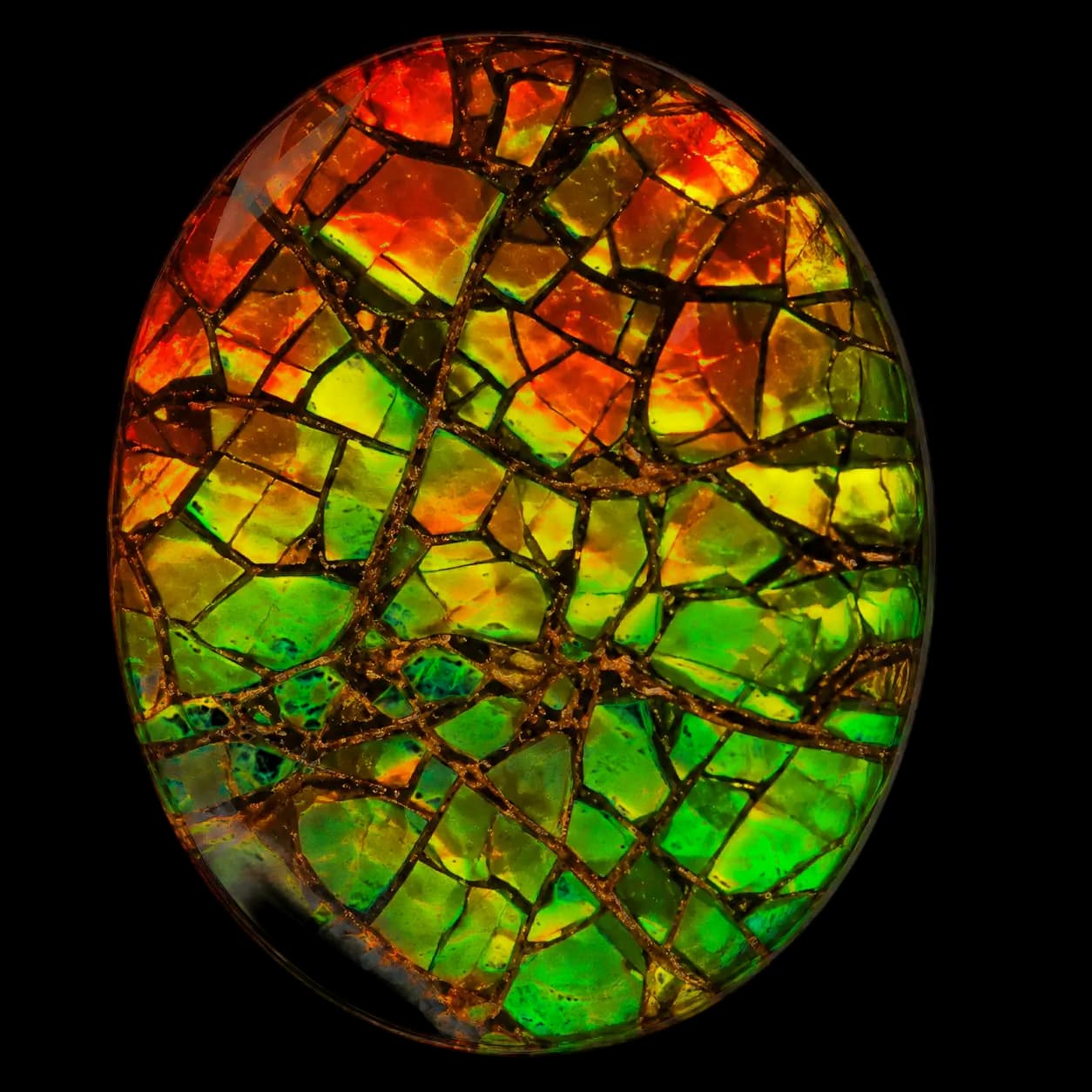
Ammolite is a rare organic gemstone created from ancient ammonite fossils, celebrated for its vibrant iridescent colours and unique natural patterns. Its exceptional beauty makes it a treasured choice for collectors and distinctive jewelry designs.
Ammolite is one of the world's rarest organic gemstones, formed from the fossilized shells of extinct ammonite creatures that lived millions of years ago. Unlike traditional mineral gemstones, Ammolite is a fossil gemstone composed mainly of aragonite, a crystalline form of calcium carbonate, with traces of organic material that create its remarkable colour display.
Ammolite belongs to the aragonite group and develops through a slow fossilization process within geological formations. The gemstone is commercially sourced mainly from the Bearpaw Formation in Alberta, Canada, where ancient ammonite shells were preserved under unique geological conditions.
The most fascinating feature of Ammolite is its iridescence, known as a play-of-colour effect. Depending on the thickness and structure of its aragonite layers, the gemstone can display vivid flashes of red, green, blue, orange, and purple. Stones showing multiple intense colours are especially valued by collectors and jewelry designers.
Ammolite has relatively low hardness compared with many gemstones, which means it is usually protected with a clear coating or placed in jewelry settings that reduce exposure to scratches and impact. It is commonly fashioned into cabochons for rings, pendants, earrings, and collector pieces.
The gemstone gained recognition in modern jewelry markets due to its rarity, fossil origin, and dramatic colour patterns. Today, natural Ammolite jewelry is appreciated by buyers who seek unusual gemstones with a connection to Earth's ancient history.
- Mineral Family
- Ammolite
- Chemical Formula
- CaCO3
- Mohs Hardness
- 3.5 - 4
- Refractive Index
- 1.52 - 1.68
- Specific Gravity
- 2.60 - 2.85
- Cleavage
- Perfect in one direction
- Crystal System
- Orthorhombic
- Luster
- Vitreous
- Color Range
- Red, Green, Blue, Orange, Purple
When choosing an Ammolite gemstone, several factors influence quality, appearance, and value.
Colour: Colour is the most important factor in Ammolite grading. Stones with bright, intense, and multiple colours are generally more desirable. Red and blue flashes are often considered rarer, while specimens displaying a broad spectrum of colours are highly sought after.
Clarity: Unlike transparent gemstones, Ammolite is valued for its surface appearance and colour display rather than traditional clarity. Buyers should look for smooth surfaces, minimal cracks, and a strong visible iridescent effect.
Cut: Ammolite is usually cut into cabochons to maximise its natural colour play. A skilled cut follows the gemstone's structure to enhance brightness and reduce weak colour areas.
Carat Weight: Larger Ammolite specimens with strong iridescence are uncommon and can command higher prices. However, colour quality and surface condition often influence value more than size alone.
Origin: Most high-quality commercial Ammolite comes from Alberta, Canada, particularly the Bearpaw Formation. Origin can contribute to authenticity and collector value.
Treatments: Many Ammolite gemstones are stabilized or coated with protective materials because the natural material is delicate. Buyers should always ask about treatments before purchasing.
Natural vs Lab-Grown: Natural Ammolite is valued for its fossil origin and unique formation process. Synthetic versions are not commonly available, but buyers should verify descriptions and documentation when purchasing.
Certification and Authenticity: A reputable gemstone certificate can provide information about authenticity, treatments, and gemstone characteristics. Buying from trusted sellers helps ensure transparency.
Price Factors: Ammolite prices depend on colour intensity, number of visible colours, surface quality, size, origin, treatment, and craftsmanship of the finished jewelry piece.
Ammolite requires gentle care because it is softer and more delicate than many traditional gemstones.
Clean Ammolite jewelry using a soft damp cloth or mild soapy water when necessary. Avoid ultrasonic cleaners, steam cleaners, abrasive materials, and harsh chemicals, as they may damage the surface or protective coating.
Store Ammolite jewelry separately in a soft pouch or lined jewelry box to prevent scratches. Avoid dropping the gemstone or exposing it to strong impacts.
For everyday wear, Ammolite is best suited for earrings, pendants, and protected ring settings. Remove Ammolite jewelry during activities involving chemicals, heavy impact, or rough handling.
Ammolite is one of the world's rarest organic gemstones, formed from the fossilized shells of extinct ammonite creatures that lived millions of years ago. Unlike traditional mineral gemstones, Ammolite is a fossil gemstone composed mainly of aragonite, a crystalline form of calcium carbonate, with traces of organic material that create its remarkable colour display.
Ammolite belongs to the aragonite group and develops through a slow fossilization process within geological formations. The gemstone is commercially sourced mainly from the Bearpaw Formation in Alberta, Canada, where ancient ammonite shells were preserved under unique geological conditions.
The most fascinating feature of Ammolite is its iridescence, known as a play-of-colour effect. Depending on the thickness and structure of its aragonite layers, the gemstone can display vivid flashes of red, green, blue, orange, and purple. Stones showing multiple intense colours are especially valued by collectors and jewelry designers.
Ammolite has relatively low hardness compared with many gemstones, which means it is usually protected with a clear coating or placed in jewelry settings that reduce exposure to scratches and impact. It is commonly fashioned into cabochons for rings, pendants, earrings, and collector pieces.
The gemstone gained recognition in modern jewelry markets due to its rarity, fossil origin, and dramatic colour patterns. Today, natural Ammolite jewelry is appreciated by buyers who seek unusual gemstones with a connection to Earth's ancient history.
- Mineral Family
- Ammolite
- Chemical Formula
- CaCO3
- Mohs Hardness
- 3.5 - 4
- Refractive Index
- 1.52 - 1.68
- Specific Gravity
- 2.60 - 2.85
- Cleavage
- Perfect in one direction
- Crystal System
- Orthorhombic
- Luster
- Vitreous
- Color Range
- Red, Green, Blue, Orange, Purple
When choosing an Ammolite gemstone, several factors influence quality, appearance, and value.
Colour: Colour is the most important factor in Ammolite grading. Stones with bright, intense, and multiple colours are generally more desirable. Red and blue flashes are often considered rarer, while specimens displaying a broad spectrum of colours are highly sought after.
Clarity: Unlike transparent gemstones, Ammolite is valued for its surface appearance and colour display rather than traditional clarity. Buyers should look for smooth surfaces, minimal cracks, and a strong visible iridescent effect.
Cut: Ammolite is usually cut into cabochons to maximise its natural colour play. A skilled cut follows the gemstone's structure to enhance brightness and reduce weak colour areas.
Carat Weight: Larger Ammolite specimens with strong iridescence are uncommon and can command higher prices. However, colour quality and surface condition often influence value more than size alone.
Origin: Most high-quality commercial Ammolite comes from Alberta, Canada, particularly the Bearpaw Formation. Origin can contribute to authenticity and collector value.
Treatments: Many Ammolite gemstones are stabilized or coated with protective materials because the natural material is delicate. Buyers should always ask about treatments before purchasing.
Natural vs Lab-Grown: Natural Ammolite is valued for its fossil origin and unique formation process. Synthetic versions are not commonly available, but buyers should verify descriptions and documentation when purchasing.
Certification and Authenticity: A reputable gemstone certificate can provide information about authenticity, treatments, and gemstone characteristics. Buying from trusted sellers helps ensure transparency.
Price Factors: Ammolite prices depend on colour intensity, number of visible colours, surface quality, size, origin, treatment, and craftsmanship of the finished jewelry piece.
Ammolite requires gentle care because it is softer and more delicate than many traditional gemstones.
Clean Ammolite jewelry using a soft damp cloth or mild soapy water when necessary. Avoid ultrasonic cleaners, steam cleaners, abrasive materials, and harsh chemicals, as they may damage the surface or protective coating.
Store Ammolite jewelry separately in a soft pouch or lined jewelry box to prevent scratches. Avoid dropping the gemstone or exposing it to strong impacts.
For everyday wear, Ammolite is best suited for earrings, pendants, and protected ring settings. Remove Ammolite jewelry during activities involving chemicals, heavy impact, or rough handling.
Ammolite for Sale
No gems found
Try broadening your search or adjusting your filters.
Have a gem of your own? List it free - no fees